
AI has reshaped the analytics stack. What used to require dashboards, manual queries, or days of back-and-forth now happens through simple natural language interaction. Still, not all AI analytics tools work the same way, and some are far more useful for real business decisioning than others.
Here is a clear, practical look at the seven tools expected to shape the AI analytics landscape in 2026. This list focuses on accuracy, usability, enterprise readiness, and how well each tool supports genuine decision making rather than novelty.
1. ThoughtSpot
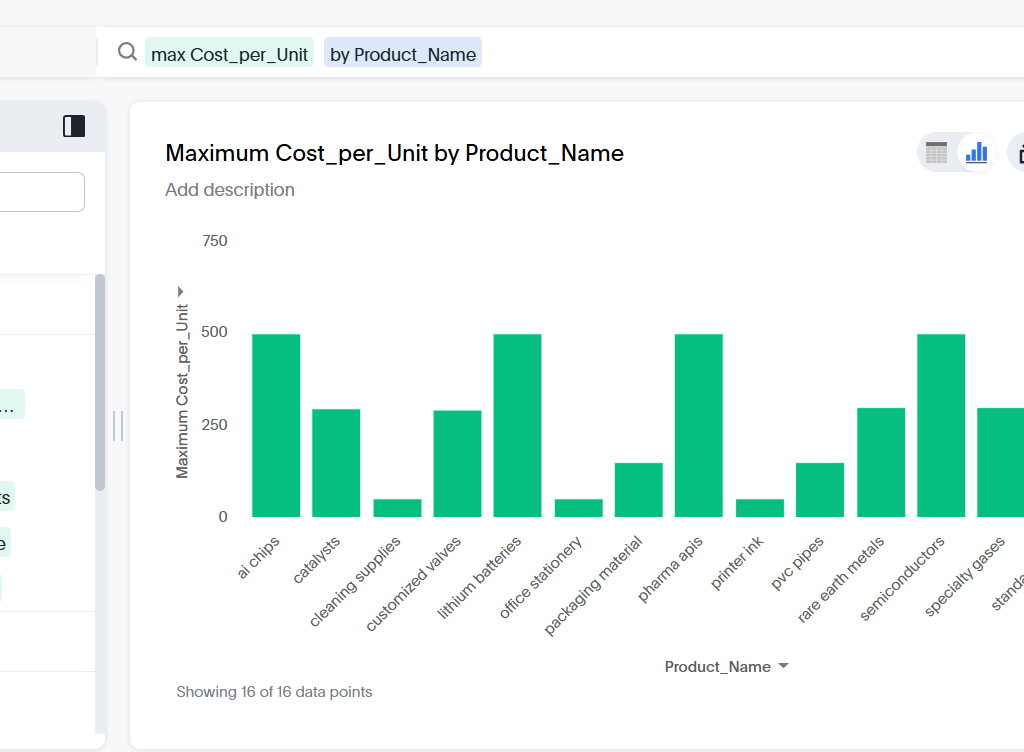
ThoughtSpot was among the earliest players to bring natural language search to analytics. Its strength lies in letting business users interact with data through searchlike queries. Over time, the platform has evolved to incorporate generative features and automated insights.
Where it excels:
- Good for organizations already comfortable with cloud BI stacks.
- Works well for dashboard exploration and guided analytics.
Limitations:
- Can struggle with nuanced business questions that require multi-step reasoning.
- Still requires careful data modeling to get strong results.
2. DataGPT
DataGPT positions itself as a conversational, autonomous analyst. Its focus is speed. It generates instant visualizations, narrative insights, and summaries with a friendly, chatlike interface.
Where it excels:
- Quick exploratory analysis.
- Lightweight reporting for nontechnical teams.
Limitations:
- Outputs can feel surface-level for complex decision problems.
- Enterprise controls and governance are still maturing.
3. AskEnola
AskEnola is an AI analyst built for accurate, business-ready decision support. It connects directly to your data, understands context with strong precision, and produces answers, reports, and reusable logic that match the way real analysts think.

Where it excels:
- High accuracy in interpreting business questions.
- Strong grounding in context thanks to Aryng’s analytics methodology.
- Useful for reducing ad-hoc demand and improving decision speed across teams.
Limitations:
- Best results come when the user knows the business goal they want to drive towards.
- Works especially well for companies ready to move beyond traditional BI.
4. Wisdom.ai
Wisdom.ai markets itself as an AI analyst with an emphasis on governance and team collaboration. It creates conversational summaries, insight briefs, and visual reports.
Where it excels:
- Collaborative analytics use cases.
- Simple visualization generation.
Limitations:
- Reasoning quality varies based on data complexity.
- Less suited for deep diagnostic questions.
5. Getdot
Getdot offers an AI-driven insights layer intended to plug into existing dashboards. Rather than replacing BI tools, it overlays narrative explanations and auto-generated insights on top of them.
Where it excels:
- Works well for teams that want to enhance current dashboards.
- Generates simple, digestible insights without heavy configuration.
Limitations:
- Depends heavily on the quality and structure of existing dashboards.
- Not ideal for open-ended business questions.
6. Databricks AI/BI
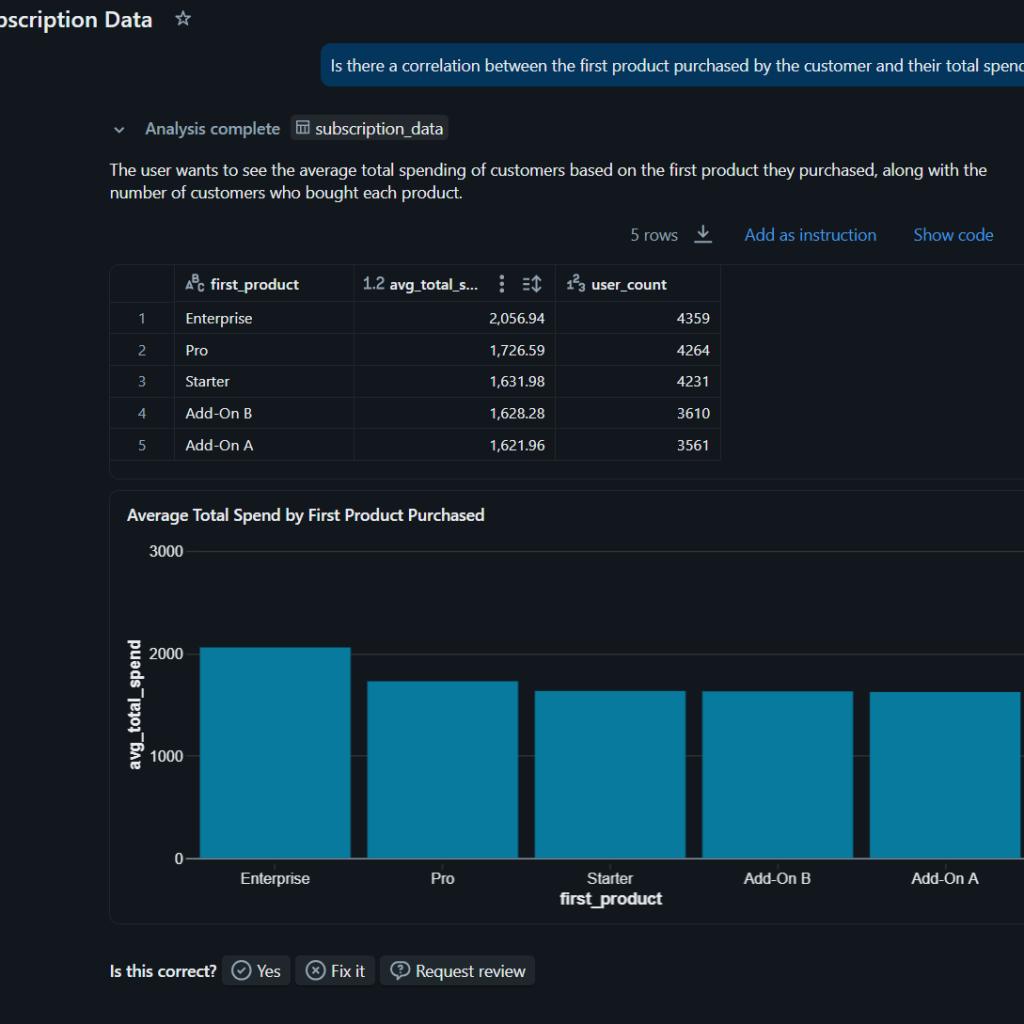
Databricks AI/BI integrates conversational analysis directly into the Databricks ecosystem. It leverages your lakehouse architecture and lets users ask natural language questions powered by your existing models and tables.
Where it excels:
- Ideal for data teams that have already standardized on Databricks.
- Strong for technical users who want a native AI experience inside their data lake.
Limitations:
- More complex to configure for nontechnical teams.
- Less tailored for business users who need high context understanding.
7. ChatGPT as an Analytics Layer
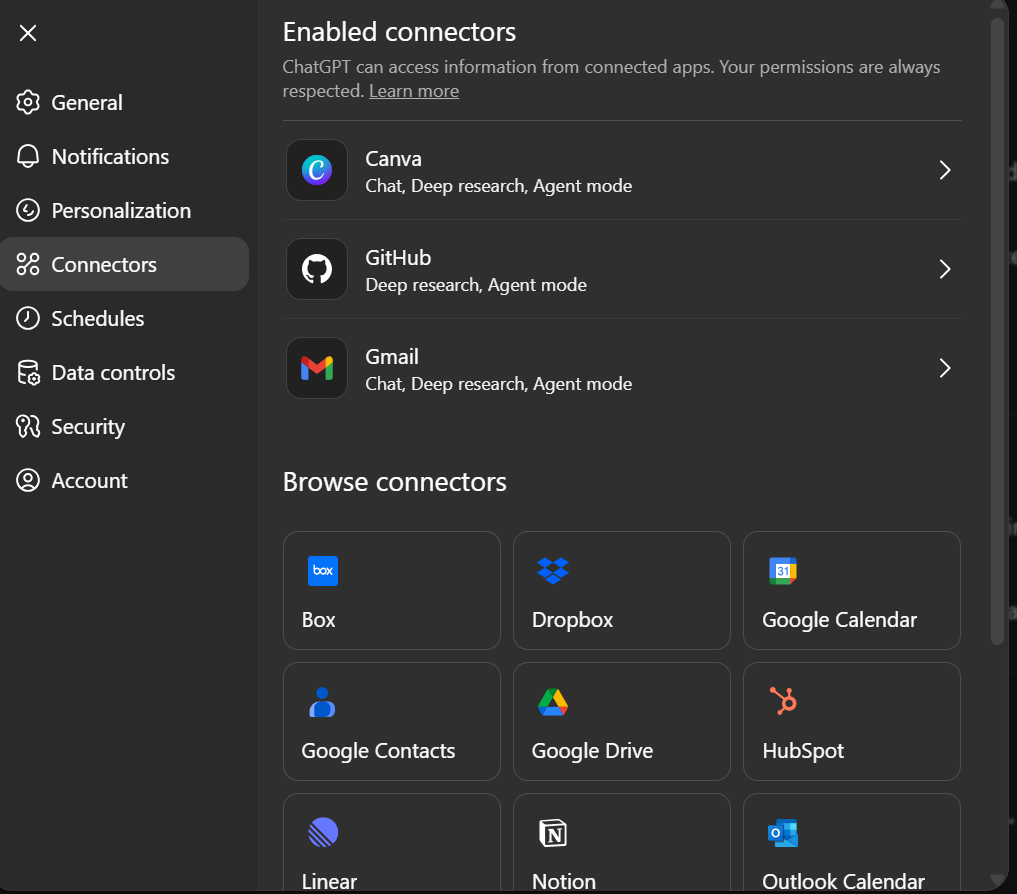
ChatGPT powers a growing set of plugins, custom GPTs, and data connectors that allow teams to run analytical queries through natural language. It is flexible and widely accessible, which makes it appealing for early experimentation.
Where it excels:
- Versatile assistant for lightweight analysis and idea exploration.
- Easy to adopt with minimal setup.
Limitations:
- Not purpose-built for enterprise analytics workflows.
- Lacks native guardrails, lineage, and governance unless heavily customized.
How to Choose the Right AI Analytics Tool
Not every organization needs all seven capabilities. The right fit depends on your team’s goals, maturity, and bandwidth. Here is a simple guide.
Choose a search-first tool like ThoughtSpot
If your users enjoy dashboard exploration and want natural language search across a well-modeled data warehouse.
Choose a fast exploratory tool like DataGPT
If your priority is quick visualizations and narrative summaries for nontechnical teams.
Choose AskEnola
If you want an AI analyst who interprets business questions accurately, reduces one-off demand on analytics teams, and supports decision-making with reliable, context-aware outputs.
Choose a collaboration tool like Wisdom.ai
If your focus is on cross-functional summaries, briefs, and lightweight insight generation.
Choose Getdot
If you want narrative explanations layered on top of your current dashboards.
Choose Databricks AI/BI
If your ecosystem is already built on Databricks, and you want native conversational access for technical users.
Choose ChatGPT
If you need a flexible, lightweight analysis companion for experimentation rather than enterprise decision-making.
AI analytics tools are rapidly expanding what teams can accomplish without heavy dashboards or long wait times. The key is choosing a platform that supports real decisions, not just quick outputs.
ThoughtSpot and DataGPT offer strong surface-level exploration. Databricks AI/BI fits deep technical stacks. ChatGPT is great for flexible experimentation. Wisdom.ai and Getdot serve specific collaboration and dashboard augmentation needs.
AskEnola stands out as the system built to act like a real analyst. It understands questions accurately, works directly on your data, and supports day-to-day decisions across business functions.